How Can I Start a Garden in a Small Apartment?
Assessing Your Apartment’s Natural Light
Before a man purchases his first bag of potting soil, he must understand the unique environment of his living space. Light is the primary currency of plant growth. In an apartment setting, the direction a window faces dictates exactly what he can grow successfully. A south-facing window typically provides the most intense, consistent light, whereas north-facing windows offer lower, indirect light levels.
He should observe his space throughout the day. If he notices the sun hitting a specific ledge for more than six hours, he has “full sun” conditions. For areas that stay bright but never see direct beams, he has “bright indirect light.” Matching the plant to the light profile is the single most important step for any beginner gardener.
Choosing Beginner-Friendly Indoor Plants
For the novice gardener, starting with resilient species is the best way to build confidence. He should look for plants that are forgiving of occasional neglect or inconsistent watering schedules. Some of the most robust options include:
- Snake Plants: These are nearly indestructible and thrive in low light.
- Pothos: A trailing vine that clearly signals when it needs water by drooping slightly.
- ZZ Plants: Known for their waxy, deep green leaves, they handle low-light corners with ease.
- Spider Plants: Highly adaptable and excellent for air purification.
Integrating these living elements into his home is one of the most effective apartment interior design ideas for making a rental feel more vibrant and established.
Essential Tools for the Urban Gardener
A man does not need a shed full of tools to maintain a thriving indoor garden. In fact, keeping a minimal kit is better for small-space living. He will need a small watering can with a long spout for precision, a pair of sharp pruning shears, and a moisture meter if he is unsure about his watering frequency.
Drainage is another non-negotiable factor. He must ensure every pot has a hole at the bottom to prevent root rot. If he finds a decorative pot without drainage, he can keep the plant in its plastic nursery liner and simply place it inside the decorative vessel. This allows him to remove the plant for watering and let the excess liquid drain away completely.
Maximizing Limited Square Footage
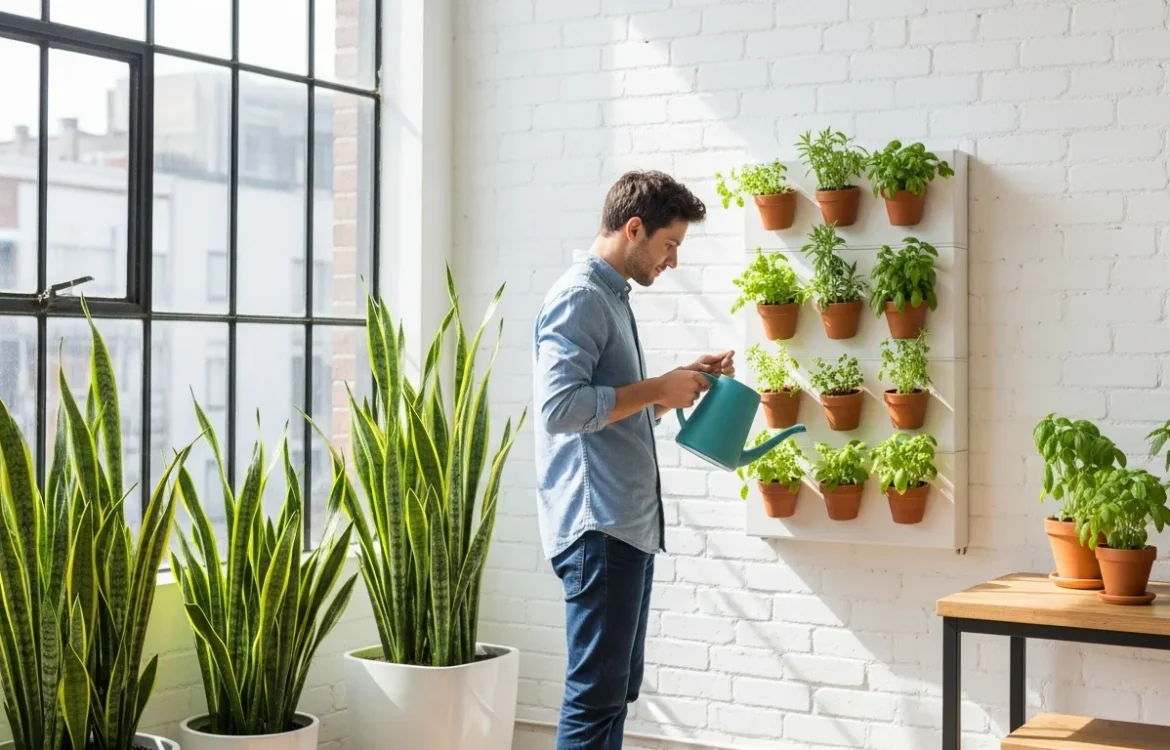
In many urban rentals, floor space is a premium commodity. The beginner gardener should look upward rather than outward. Vertical gardening—using wall-mounted planters, hanging baskets, or tall shelving units—allows him to cultivate a lush environment without sacrificing his walking paths.
When selecting pieces to hold his collection, he should consider what is the best furniture for a small apartment that can serve a dual purpose. For instance, a sturdy bookshelf placed near a window can house both his favorite novels and a diverse array of succulents and tropical ferns.
Common Pitfalls and Maintenance Tips
The most frequent mistake a beginner makes is overwatering. It is far easier for a man to revive a thirsty plant than one whose roots have begun to decay from sitting in soggy soil. He should always stick his finger an inch into the soil; if it feels damp, he should wait a few more days before reaching for the watering can.
Dusting is another often-overlooked maintenance task. In an apartment, dust can quickly coat leaves, blocking the plant’s ability to photosynthesize. He should periodically wipe the leaves with a damp cloth to keep his plants breathing and growing at their full potential.
Frequently Asked Questions
What are the best plants for an apartment with no balcony?
Low-light tolerant plants like the Snake Plant, ZZ Plant, and Cast Iron Plant are ideal for apartments that lack outdoor space or large windows. They adapt well to artificial indoor lighting and survive in corners with minimal natural sun.
How often should I fertilize my indoor garden?
Generally, a man should fertilize his indoor plants once a month during the growing season, which typically spans from spring through early autumn. During the winter months, he should stop fertilizing as the plants enter a dormant phase.
Can I grow herbs on a windowsill?
Yes, herbs like basil, mint, and chives can thrive on a windowsill provided they receive at least 4 to 6 hours of direct sunlight daily. If the window is drafty in the winter, he should ensure the plants aren’t touching the cold glass.