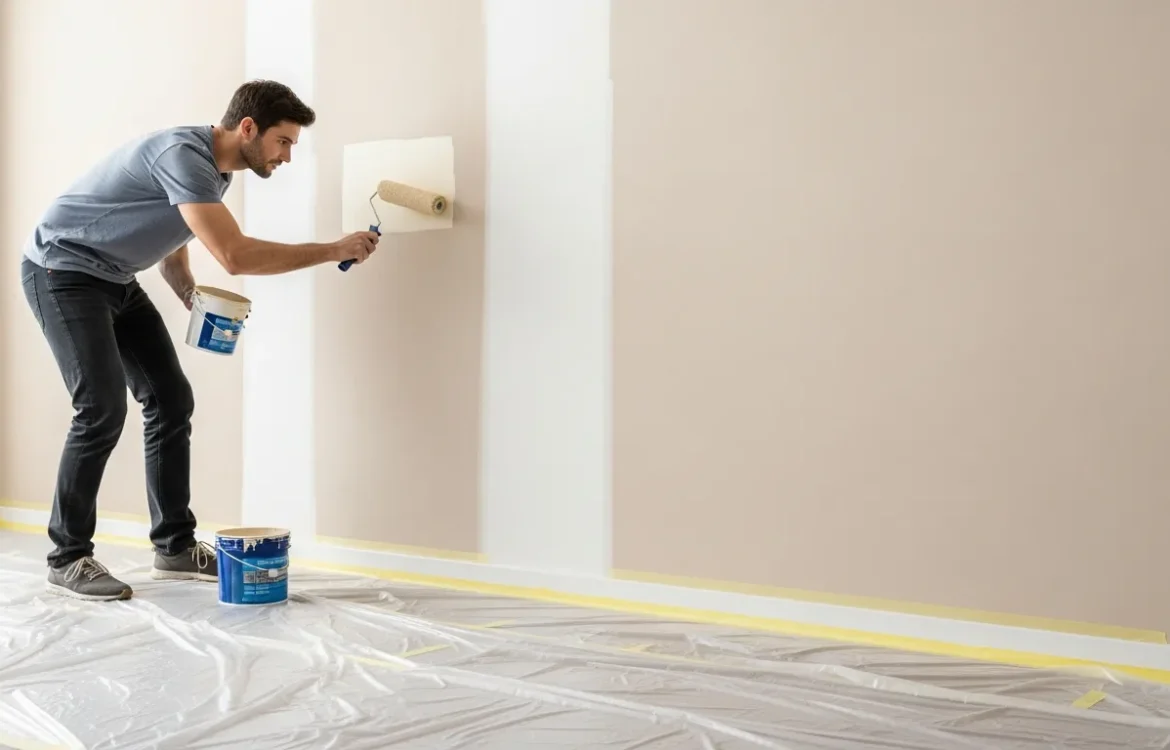
How to Paint an Apartment Wall Without Losing Your Security Deposit
Consulting Your Lease Agreement Before the First Brushstroke
Before a man picks up a roller, he must first consult his legal standing. Most standard lease agreements contain specific clauses regarding structural or aesthetic changes to the unit. While painting an apartment wall is one of the most effective ways to personalize a living space, doing so without written permission can lead to financial penalties.
He should reach out to his landlord via email to request approval. Even if the landlord agrees verbally, having a written record ensures he is protected when it is time to move out. If the landlord is hesitant, a tenant might suggest using a neutral color or promising to return the wall to its original state before his tenancy ends. This proactive approach is a key part of sophisticated apartment interior design ideas that respect the property owner’s requirements.
Gathering the Right Tools for a Professional Finish
To achieve a high-end look that doesn’t scream “DIY disaster,” a man needs the right equipment. Using cheap brushes or low-quality rollers will result in streaks and shedding, which are difficult to fix later. He should invest in the following essentials:
- Angled Sash Brush: Ideal for “cutting in” around edges and corners.
- High-Quality Roller Cover: A 3/8-inch nap is usually best for standard apartment drywall.
- Painter’s Tape: Specifically the blue or green variety that prevents paint bleed.
- Drop Cloths: Canvas is preferred over plastic as it absorbs spills and doesn’t become slippery.
- Sanding Sponge: To smooth out any existing imperfections on the wall before starting.
Prepping the Surface: The Secret to Longevity
A professional-grade paint job is 70% preparation and 30% application. He must begin by cleaning the wall. Dust, cobwebs, and oils from hands can prevent paint from adhering correctly. A simple mixture of warm water and a mild detergent is usually sufficient. After the wall is dry, he should use his sanding sponge to lightly scuff the surface, especially if the current paint has a high-gloss finish.
Next comes the taping. He should apply painter’s tape along the baseboards, ceiling line, and any adjacent walls he does not intend to paint. He must press the edge of the tape down firmly with a putty knife or his fingernail to create a tight seal. This ensures that when he removes the tape, he is left with a crisp, sharp line that defines the space.
Applying the Paint: Technique and Execution
When he is ready to apply the color, he should start by “cutting in.” This involves using the angled brush to paint a two-inch border around the edges where the roller cannot reach. He should work in small sections to keep a “wet edge,” which prevents visible lap marks where the brushed paint meets the rolled paint.
Once the edges are set, he can move to the roller. He should load the roller evenly in the tray, ensuring it is saturated but not dripping. The best technique is to apply the paint in a large “W” or “M” pattern on the wall, then fill in the gaps without lifting the roller. This technique distributes the paint evenly across the surface. He should plan for at least two coats, allowing the first to dry completely according to the manufacturer’s instructions before starting the second.
Restoring the Wall and Protecting Your Deposit
As the end of a lease approaches, a tenant may be required to return the apartment to its original condition. If he painted a bold accent wall, he will likely need to prime it and repaint it in the landlord’s original neutral shade. Skipping the primer on a dark wall is a mistake; the old color will often bleed through a single coat of white or beige.
Properly restoring the unit is the most reliable way for a man to ensure he gets his apartment deposit back in full. He should remove all painter’s tape at a 45-degree angle while the paint is still slightly tacky to avoid peeling. Finally, he should inspect the floor for any stray drops and clean them immediately with a damp cloth.
Frequently Asked Questions
Do I need to prime the wall if I am painting it a similar color?
If the new color is very close to the old one and the wall is in good condition, he may be able to skip the primer. However, if he is moving from a glossy finish to a matte one, or from a dark color to a light one, a primer is essential for proper coverage.
How long should I wait between coats of paint?
Generally, he should wait at least two to four hours for latex-based paints. He should check the specific drying times on the paint can, as humidity and temperature in his apartment can affect how quickly the surface sets.
Can I use peel-and-stick wallpaper instead of painting?
Yes, peel-and-stick options are a popular alternative. However, he must be careful during removal, as some adhesives can pull off the underlying drywall paper if they have been in place for several years.
What should I do if I get paint on the carpet?
He should act immediately. If the paint is still wet, he can blot it with a paper towel and use a mixture of dish soap and water to gently lift the pigment. He should never rub the stain, as this pushes the paint deeper into the carpet fibers.